KM Pace to Mile Pace
Convert min/km to min/mile and back, or turn either pace into km/h and mph, with finish times for the mile, 5K, 10K, half and marathon.
min/mile = min/km x 1.60934
To convert min/km to min/mile, multiply the pace in seconds by 1.60934, the kilometers in one mile. 5:00 per km is 300 x 1.60934 = 482.8 seconds, so 8:03 per mile. 4:00 per km is 6:26 per mile. To go back, divide: 8:00 per mile is 4:58 per km.
Pace converter
Type a pace. 5:30 means 5 minutes 30 seconds, and 5.5 means five and a half minutes, which is also 5:30. Two digits after a dot, like 5.08, get both readings.
Dot check: 5.30 shows both readings, 5:30 as minutes and seconds first, then 5.3 decimal minutes, which is 5:18.
Complete KM to Mile Pace Conversion Table
A pace conversion chart covering every pace from 3:00/km to 9:00/km in 15 second steps, with the matching min/mile, km/h and mph. Bookmark it for training.
5:00/km is 8:03/mi and 4:00/km is 6:26/mi. Type any pace into the converter and its nearest row lights up here.
25 paces, 3:00 to 9:00/km| Min/km | Min/mile | Km/h | Mph |
|---|---|---|---|
| 3:00 | 4:50 | 20.00 | 12.43 |
| 3:15 | 5:14 | 18.46 | 11.47 |
| 3:30 | 5:38 | 17.14 | 10.65 |
| 3:45 | 6:02 | 16.00 | 9.94 |
| 4:00 | 6:26 | 15.00 | 9.32 |
| 4:15 | 6:50 | 14.12 | 8.77 |
| 4:30 | 7:15 | 13.33 | 8.28 |
| 4:45 | 7:39 | 12.63 | 7.85 |
| 5:00 | 8:03 | 12.00 | 7.46 |
| 5:15 | 8:27 | 11.43 | 7.10 |
| 5:30 | 8:51 | 10.91 | 6.78 |
| 5:45 | 9:15 | 10.43 | 6.48 |
| 6:00 | 9:39 | 10.00 | 6.21 |
| Min/km | Min/mile | Km/h | Mph |
|---|---|---|---|
| 6:15 | 10:04 | 9.60 | 5.97 |
| 6:30 | 10:28 | 9.23 | 5.74 |
| 6:45 | 10:52 | 8.89 | 5.52 |
| 7:00 | 11:16 | 8.57 | 5.33 |
| 7:15 | 11:40 | 8.28 | 5.14 |
| 7:30 | 12:04 | 8.00 | 4.97 |
| 7:45 | 12:28 | 7.74 | 4.81 |
| 8:00 | 12:52 | 7.50 | 4.66 |
| 8:15 | 13:17 | 7.27 | 4.52 |
| 8:30 | 13:41 | 7.06 | 4.39 |
| 8:45 | 14:05 | 6.86 | 4.26 |
| 9:00 | 14:29 | 6.67 | 4.14 |
Want every pace over every race distance instead? The pace chart covers 4:00 to 15:00 per mile for the 5K, 10K, half and marathon.
Run in any unit. Claim the streets you loop.
Motera tracks your runs in kilometers or miles. A run that loops back to where it started claims the streets inside it on a live map of your city, and every run earns XP and clears the fog on your map.
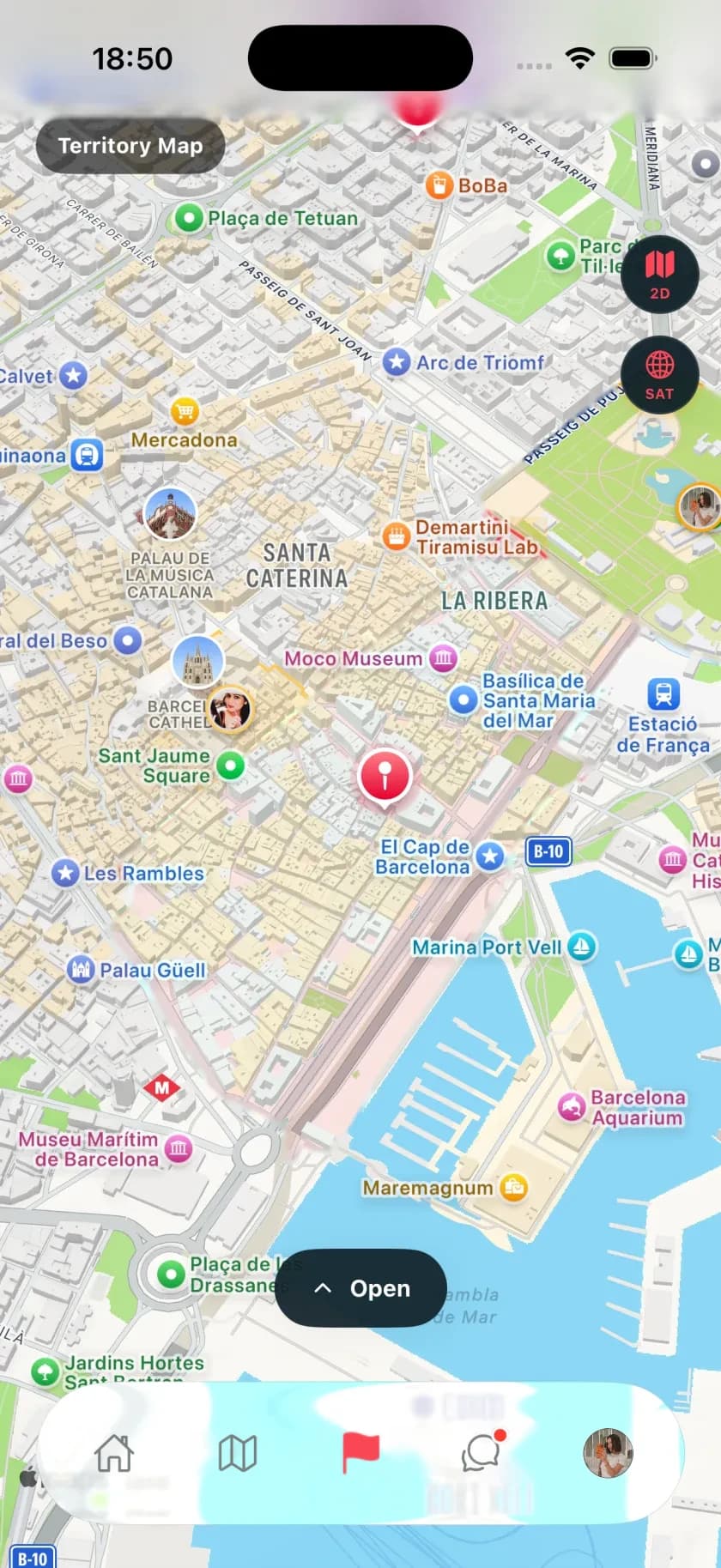
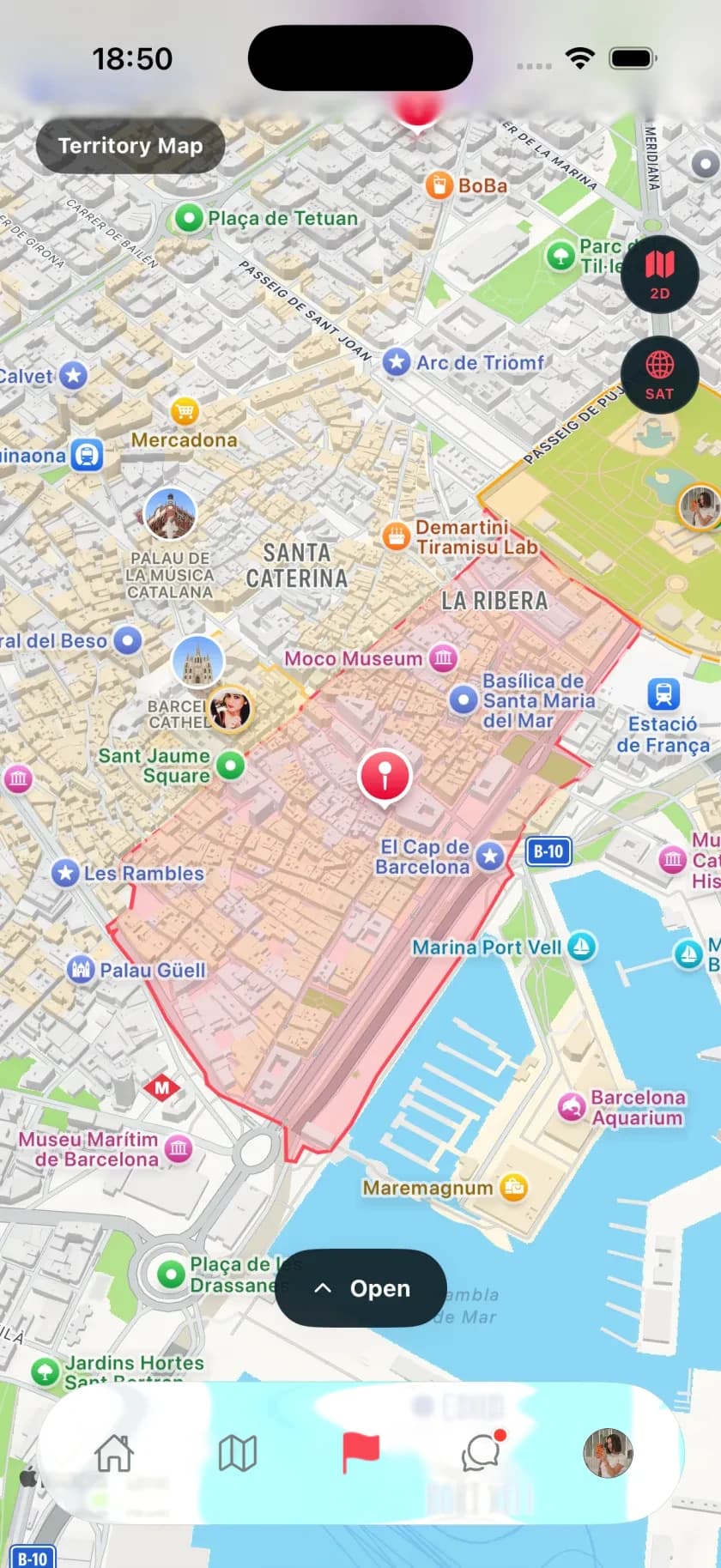 You claimed a new territory!

Mile Pace to KM Pace Conversion Table
The same conversion the other way round, for runners who think in miles: 4:00 to 15:00 per mile in 30 second steps, with min/km, km/h and mph.
| Min/mile | Min/km | Km/h | Mph |
|---|---|---|---|
| 4:00 | 2:29 | 24.14 | 15.00 |
| 4:30 | 2:48 | 21.46 | 13.33 |
| 5:00 | 3:06 | 19.31 | 12.00 |
| 5:30 | 3:25 | 17.56 | 10.91 |
| 6:00 | 3:44 | 16.09 | 10.00 |
| 6:30 | 4:02 | 14.86 | 9.23 |
| 7:00 | 4:21 | 13.79 | 8.57 |
| 7:30 | 4:40 | 12.87 | 8.00 |
| 8:00 | 4:58 | 12.07 | 7.50 |
| 8:30 | 5:17 | 11.36 | 7.06 |
| 9:00 | 5:36 | 10.73 | 6.67 |
| 9:30 | 5:54 | 10.16 | 6.32 |
| Min/mile | Min/km | Km/h | Mph |
|---|---|---|---|
| 10:00 | 6:13 | 9.66 | 6.00 |
| 10:30 | 6:31 | 9.20 | 5.71 |
| 11:00 | 6:50 | 8.78 | 5.45 |
| 11:30 | 7:09 | 8.40 | 5.22 |
| 12:00 | 7:27 | 8.05 | 5.00 |
| 12:30 | 7:46 | 7.72 | 4.80 |
| 13:00 | 8:05 | 7.43 | 4.62 |
| 13:30 | 8:23 | 7.15 | 4.44 |
| 14:00 | 8:42 | 6.90 | 4.29 |
| 14:30 | 9:01 | 6.66 | 4.14 |
| 15:00 | 9:19 | 6.44 | 4.00 |
Values other charts get wrong
A 4:00/mi mile is 2:29 per km, though some charts list 2:39. A 7:00/mi mile is 4:21 per km. Both come straight from dividing the seconds by 1.60934, so check any printed chart against these two rows before you trust the rest.
Common Pace and Speed Conversions
The conversions runners look up most, from km pace to mile pace, treadmill speed to pace and marathon goal paces.
How to Convert min/km to min/mile
One mile is about 1.60934 km, so a mile takes 1.60934 times as long as a kilometer at the same pace. Every number on this page comes from that one ratio.
min/km to min/mile
min/mile = min/km x 1.60934
5:00/km = 300 s x 1.60934 = 482.8 s = 8:03/mi
min/mile to min/km
min/km = min/mile / 1.60934
8:00/mi = 480 s / 1.60934 = 298.3 s = 4:58/km
Minutes per mile to mph
mph = 60 / min per mile
8:00/mi = 60 / 8 = 7.50 mph. 10:00/mi = 6.00 mph
Pace to km/h
km/h = 60 / min per km
6:00/km = 60 / 6 = 10.00 km/h. 5:00/km = 12.00 km/h
Speed to pace
pace = 60 / speed
7.5 mph = 60 / 7.5 = 8:00/mi. 10 km/h = 6:00/km
mph to km/h
km/h = mph x 1.60934
7.5 mph x 1.60934 = 12.07 km/h
Pace and speed are the same number, flipped
Pace is time per distance, like 8:00 per mile. Speed is distance per time, like 7.5 mph. Your watch, your treadmill and a race results page can each default to a different one of the four units, which is why one converter covers all of them.
The exact mile is 1.609344 km, the value the US and Commonwealth countries agreed on in 1959 and the one in NIST Special Publication 811. Rounding it to 1.60934 leaves every pace on this page the same to the second.
5.5 min/km Is Not 5:50
Spreadsheets and some apps write pace as decimal minutes. The part after the dot is a fraction of a minute, not seconds.
5.5 minutes is five and a half minutes, so 5:30 per km and 8:51 per mile. 5.30 has two readings: 5:30 if the dot stands in for a colon, or 5.3 minutes (5:18) if it came from a spreadsheet. To turn decimals into seconds, multiply the part after the dot by 60.
What is 5.08 km pace in miles?
5.08 min/km as minutes and seconds is 5:08 per km, so 8:16 per mile. As decimal minutes it is 304.8 seconds, so 5:05 per km and 8:11 per mile.
6.26 min/km as minutes and seconds is 6:26 per km, so 10:21 per mile. As decimal minutes it is 375.6 seconds, so 6:16 per km and 10:04 per mile.
The converter above reads 5:30 as minutes and seconds and 5.5 as decimal minutes. Type two digits after a dot, like 5.08, and it shows both readings, minutes and seconds first.
Quick Mental Math Shortcuts
You will not always have a phone mid run. These shortcuts get you within a few seconds, which is plenty for training.
km pace to mile pace: add about 60%. Mile pace to km pace: subtract about 40%, then add a few seconds back, because the exact factor is 0.621. Multiplying by 0.62 lands on the right second at most paces.
km to mile: multiply by 1.6
5:00/km x 1.6 = 8:00/mi
Add 60% for km to mile
4:00/km + 60% (2:24) = 6:24/mi
mile to km: divide by 1.6
10:00/mi / 1.6 = 6:15/km
mile to km: multiply by 0.6
8:00/mi x 0.6 = 4:48/km
mile to km: multiply by 0.62
8:00/mi x 0.62 = 4:58/km
Common Race Goal Paces in Both Units
Popular 5K, 10K, half and marathon goals with the pace each one needs in min/km and min/mile, the treadmill speed in km/h and mph, and the halfway split for even pacing.
| Goal | Per km | Per mile | Km/h | Mph | Halfway | Speed |
|---|---|---|---|---|---|---|
| Sub 20:00 5K | 4:00/km6:26/mi15.00 km/h9.32 mphHalfway 10:00 | |||||
| Sub 25:00 5K | 5:00/km8:03/mi12.00 km/h7.46 mphHalfway 12:30 | |||||
| Sub 30:00 5K | 6:00/km9:39/mi10.00 km/h6.21 mphHalfway 15:00 | |||||
| Sub 50:00 10K | 5:00/km8:03/mi12.00 km/h7.46 mphHalfway 25:00 | |||||
| Sub 1:00:00 10K | 6:00/km9:39/mi10.00 km/h6.21 mphHalfway 30:00 | |||||
| Sub 1:30:00 half | 4:16/km6:52/mi14.06 km/h8.74 mphHalfway 45:00 | |||||
| Sub 2:00:00 half | 5:41/km9:09/mi10.55 km/h6.55 mphHalfway 1:00:00 | |||||
| Sub 3:00:00 marathon | 4:16/km6:52/mi14.06 km/h8.74 mphHalfway 1:30:00 | |||||
| Sub 3:30:00 marathon | 4:59/km8:01/mi12.06 km/h7.49 mphHalfway 1:45:00 | |||||
| Sub 4:00:00 marathon | 5:41/km9:09/mi10.55 km/h6.55 mphHalfway 2:00:00 | |||||
| Sub 4:30:00 marathon | 6:24/km10:18/mi9.38 km/h5.83 mphHalfway 2:15:00 | |||||
| Sub 5:00:00 marathon | 7:07/km11:27/mi8.44 km/h5.24 mphHalfway 2:30:00 |
Paces are for the round goal time, so run a second or two faster to finish under it. For splits and pacing plans for one race, see the race pace calculator or the mile pace calculator.
Race Pace Converter: From One Distance to Another
Converting units keeps the pace the same. Converting between distances does not, because pace slows as the race gets longer. Type a race result for Riegel predictions, or use the multipliers below to turn a time at one distance into a range at another.
Type a recent race result. The Riegel formula turns it into a predicted time and pace for each of the other distances.
The Riegel column uses T2 = T1 x (D2 / D1) ^ 1.06. It sits at or below every multiplier range, so treat it as the best case for a runner fully trained for the distance.
Race Equivalency Calculator
Type one race result and get the equivalent time and pace for every other distance.
Altitude Pace Calculator
How much slower the same effort runs at elevation, and the pace to aim for.
Heat Adjusted Pace Calculator
How temperature and humidity change your pace, and the adjusted target.
Treadmill Speed to Pace
Treadmills show speed, runners think in pace. Divide 60 by the speed in mph for minutes per mile, or by the speed in km/h for minutes per km.

60 / 8 = 7.5. Set the number before you start moving, then run. For every setting from walking to sprinting, with incline, use the treadmill pace converter. Metric treadmill? The km/h to pace chart starts from km/h.
Set a 1% incline to match the road
A flat belt removes the air resistance you push through outdoors. A 1996 study in the Journal of Sports Sciences found a 1% grade best matched the energy cost of road running, tested at about 6.5 to 11 mph.
Equivalent Speed = Treadmill Speed x (1 + 0.03 x Grade%)
A rough rule for steeper grades. 8.0 mph at 5% works out to 9.2 mph of outdoor effort, about 6:31 per mile. The same idea drives the grade adjusted pace calculator for hilly routes.
When to Use Each Pace Unit
Four units describe the same run. Which one you need depends on where you race, what your watch is set to and which treadmill you are on.

Min/mile
The standard pace unit in the United States. Most US road races mark the course in miles, so pace plans and splits come in min/mile.
Best for: US road races, American training plans, apps set to imperial units
Min/km
The pace unit in most of the world. Parkrun, European and Australian races and most international plans use kilometers, and a watch set to metric shows min/km.
Best for: Parkrun, races outside the US, international training plans
Mph
The display unit on US treadmills. Knowing the mph that matches your target pace makes a treadmill session quick to set up.
Best for: US treadmills, speed based workouts
Km/h
The display unit on treadmills outside the US, and the unit cyclists use. Handy when you compare a run with a ride.
Best for: Metric treadmills, cross training on a bike
Kilometers or miles, a loop claims real ground.
In Motera, a run that loops back to where it started turns the area inside into your territory, whichever unit your watch shows. Draw a loop on the map with your finger or mouse and see how much ground one run can take.
- Zones0
- Area0 m²
- Loop0.00 km
- XP+0
Demo numbers. In the app, your real GPS run draws the loop.
© OpenStreetMap, OpenFreeMap

Why Your Watch and Treadmill Disagree
Your watch estimates pace from GPS and stride data, which moves second to second. The treadmill reports the speed it thinks the belt is moving. Neither is wrong on purpose.
This is why your Garmin pace doesn't match the treadmill
A coach breaks down why a GPS watch and a treadmill show different paces for the same effort. In a study of treadmill belts, average belt speed ranged from about 98 to 103% of the set speed, so no converted pace is exact to the second.
Trusting the display to the decimal
Home and gym treadmills are not always calibrated. A belt set to 7.0 mph can run measurably faster or slower than the number shown.
Ignoring the missing wind
A pace that feels steady on the belt can be harder to hold on the road, where wind and corners add work. Run a few key sessions outside before race day so the goal pace is tested where you will race it.
Doing the math mid run
Converting min/mile to mph with your heart rate up is where most treadmill pacing errors start. Write the speed for each interval on a note by the console, or keep the treadmill table above open on your phone.
Never rechecking after maintenance
Belt tension and lubrication drift over months of use, which can shift the true speed at a setting while the display stays the same.
Comparing a treadmill split to a race
The same displayed pace indoors and outdoors is not run under the same conditions, so treat a treadmill time trial as an estimate.
Averaging GPS pace over a short stretch
Live GPS pace bounces with signal noise and stride changes. Average over a longer stretch before comparing it with a treadmill number.
Which Pace Tool Should You Use?
This page converts a pace or speed you already have. If your question starts somewhere else, one of these tools is a better fit.
KM Pace to Mile Pace Converter
What is my pace in min/km, min/mile, km/h and mph, and what does it add up to over a mile, 5K, 10K, half and marathon? Best for converting between watch, treadmill and race units.
Treadmill Pace Converter
What pace is every treadmill setting, with incline?
Setting up a treadmill session in mph or km/h, from walking to sprinting.
Running Speed Calculator
How fast am I running from a distance and a time?
Turning a finished run into speed, when you know the distance and time rather than the pace.
Race Equivalency Calculator
What does my 5K say about my marathon?
Equivalent times and paces across race distances from one result.
Pace Chart
What finish time does every pace give over each race?
Scanning 4:00 to 15:00 per mile across the 5K, 10K, half and marathon.
Mile Pace Calculator
What pace per mile do I need for a goal time?
Working out a mile pace from a race goal, with splits.
Pace Calculator
What is my pace, time or distance from the other two?
Any run where you know two of the three numbers.
About This Pace Converter

This is a two way running pace converter for km to miles pace and back, min/km to min/mile or min/mile to min/km. Enter a pace in min/km or min/mile, or a speed in km/h or mph, and it returns the other three units plus finish times for a mile, 5K, 10K, half marathon and marathon at that pace.
It uses 1.60934 km per mile. Pace per mile is pace per km times 1.60934, and speed is 60 divided by the pace in minutes. A 5:00 per km pace is 8:03 per mile, 12.00 km/h and 7.46 mph.
Pace can be typed as minutes and seconds (5:30) or as decimal minutes (5.5). The converter says which reading it used. Two digits after a dot, like 5.08, get both readings, 5:08 first and 5.08 decimal minutes (5:05) second.
The page also holds a 3:00 to 9:00 per km table, a 4:00 to 15:00 per mile table, race goal paces in every unit, mental math shortcuts and a compact treadmill speed and incline chart. For pacing a single race, the race pace calculator adds splits.
It is built for runners who switch between a watch in one unit, a treadmill in another and race plans in a third. The converter is free, runs in your browser and needs no signup. Motera is a separate iOS app that turns runs into territory on a live map.
KM to mile pace questions
How do I convert min/km to min/mile?
Multiply the pace by 1.60934, the number of kilometers in a mile. For 5:00 per km, 300 seconds x 1.60934 = 482.8 seconds, which is 8:03 per mile. The converter on this page does it instantly. For a quick estimate in your head, multiply by 1.6 and add a few seconds.
How do I convert min/mile to min/km?
Divide the pace by 1.60934. For 8:00 per mile, 480 seconds / 1.60934 = 298.3 seconds, which is 4:58 per km. Multiplying by 0.62137 gives the same answer. For a quick estimate, multiply by 0.62.
What is the difference between pace and speed?
Pace is time per distance, like 8:00 per mile. Speed is distance per time, like 7.5 mph. They are inverses of each other: minutes per mile = 60 / mph. Runners use pace because it maps straight onto split times. Treadmills and cyclists use speed.
How do I convert mph to running pace?
Divide 60 by the speed. A treadmill at 7.5 mph is 60 / 7.5 = 8, so 8:00 per mile. For pace per km, divide 60 by the speed in km/h: 10 km/h is 6:00 per km. Going the other way, mph = 60 / minutes per mile.
What is 10 kph in running pace?
10 km/h is 6:00 per km, 9:39 per mile, or 6.21 mph. At that pace a 5K takes 30:00 and a 10K takes 1:00:00.
Why do runners use different pace units?
Runners in the United States and the United Kingdom traditionally train in miles, and most of the rest of the world uses kilometers. Race distances mix the two: a 5K is measured in kilometers, while many American runners train in miles. If you travel for races or follow plans from abroad, you convert often.
What is a good pace in min/km for a beginner?
A good beginner pace is 6:00 to 8:00 per km (9:39 to 12:52 per mile). The pace matters less than the effort: run at a conversational pace, where you can speak in full sentences. Focus on time on your feet and consistency first.
Is 5:00 per km a good pace?
A 5:00 per km pace (8:03 per mile) is a solid recreational running pace. It works out to a 25:00 5K, a 50:00 10K and a 1:45:29 half marathon. For many runners it is an easy run pace, for others it is a first race goal.
What pace is a 4 hour marathon?
A 4:00:00 marathon needs 5:41 per km or 9:09 per mile. That is 10.55 km/h or 6.55 mph on a treadmill.
What is the quickest way to convert km pace to mile pace in my head?
Multiply by 1.6, or add 60%, and round up slightly. For 5:00 per km, 5 x 1.6 = 8 minutes, and the exact answer is 8:03. For 4:30 per km, 4.5 x 1.6 = 7.2 minutes, which is 7:12, and the exact answer is 7:15. Close enough for training.
Is treadmill pace the same as outdoor pace?
Close, but a flat treadmill is a little easier because there is no air resistance. A 1996 study in the Journal of Sports Sciences found a 1% treadmill grade best matched the energy cost of outdoor running. Set a 1% incline and the converted pace is a fair match.